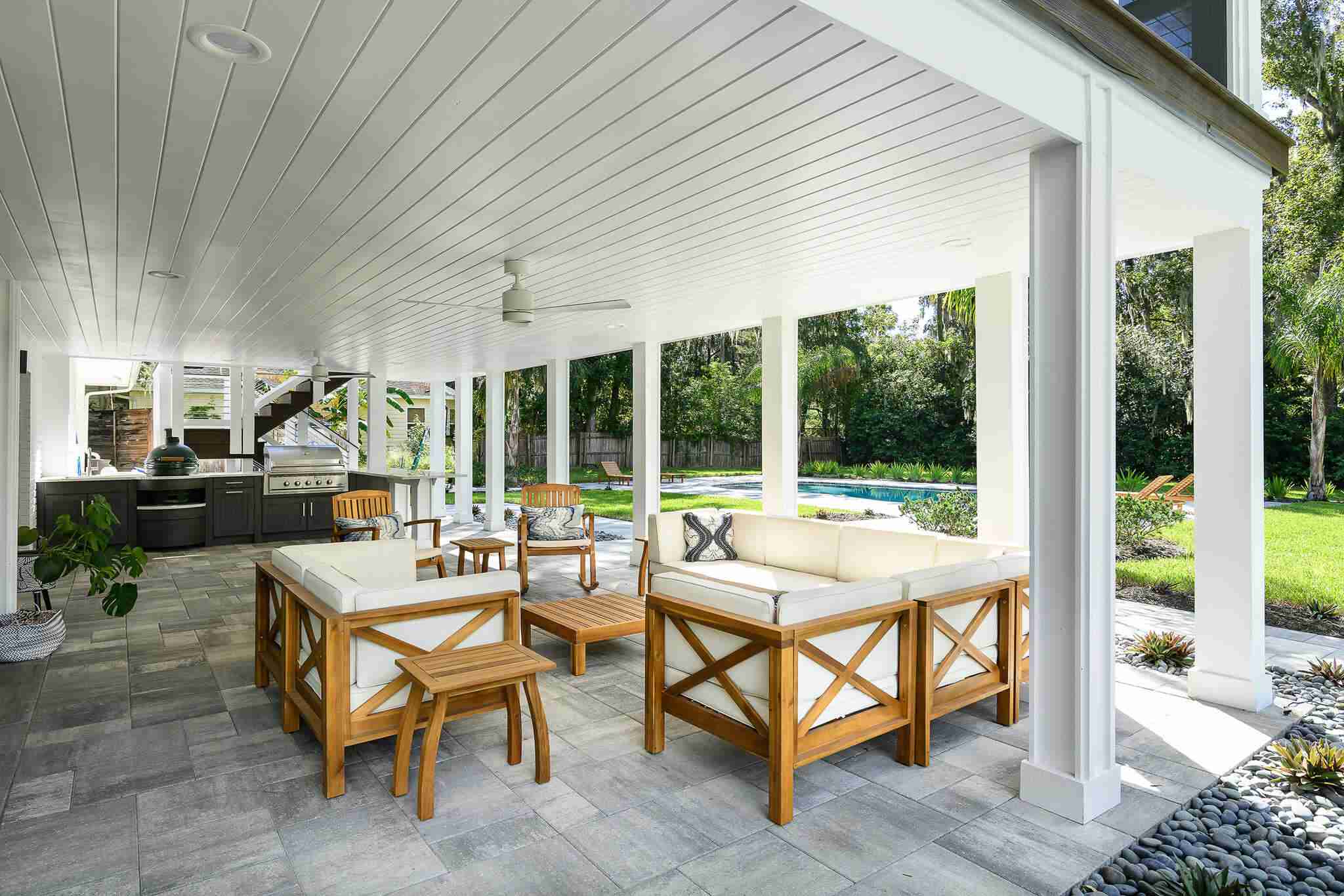
Your patio is where your home meets the outdoors. It is where mornings start with coffee, where weekends unfold around the grill, and where evenings end by the fire. The pavers you choose for that space determine how it looks, how it holds up, and how it feels underfoot for decades to come. In Jacksonville, those choices carry extra weight — our climate, soil, and sun exposure all influence which materials perform best.
Here is what you need to know before you commit to a paver.
Consider Jacksonville’s Climate
Jacksonville sits in USDA Zone 9a with average summer highs pushing into the mid-90s. That heat is absorbed and radiated by your patio surface, which means material selection directly impacts comfort.
Lighter-colored pavers reflect more solar radiation and stay noticeably cooler underfoot. If your patio gets full afternoon sun, this matters more than most homeowners realize. Dark charcoal pavers can reach surface temperatures 20-30 degrees higher than a comparable sand or cream tone.
Beyond heat, Jacksonville’s humidity and seasonal rain put pavers through constant wet-dry cycles. You want materials with low porosity — pavers that resist moisture absorption hold their color longer and are less prone to efflorescence (that white chalky residue that appears on cheaper concrete products).
UV stability is the third factor. Florida sun fades inferior products within a few years. Premium pavers from manufacturers like Belgard and Tremron are engineered with iron oxide pigments that penetrate the full depth of the paver, not just a surface coating.
Popular Paver Materials
Not every paver is right for every project. Here is a straightforward breakdown of what works well in Northeast Florida.
-
Concrete pavers are the most popular choice for Jacksonville patios. Brands like Belgard (Catalina Grana, Mega-Libre) and Tremron (Shellstone, Stonehurst) offer hundreds of color and texture combinations. They are manufactured to consistent dimensions, which means tighter joints and cleaner patterns. A well-installed concrete paver patio will last 25-50 years.
-
Travertine pavers are a natural stone option prized for their cool surface temperature. They stay comfortable even in direct sun, making them an excellent choice around pools and in entertainment areas. The naturally tumbled edges give a Mediterranean look that pairs well with stucco and stone-veneer exteriors common in Jacksonville neighborhoods.
-
Natural stone (flagstone, bluestone, limestone) offers an organic, one-of-a-kind appearance. Each piece is unique, which creates visual interest but also means more variation in thickness and joint width. Natural stone generally costs more per square foot and requires a skilled installer to achieve a flat, stable surface.
-
Brick pavers deliver a classic, timeless aesthetic. True clay brick holds its color indefinitely because the pigment is baked through the entire unit. However, brick offers fewer shape options than concrete, and standard brick dimensions limit pattern variety.
Patterns That Make a Difference
The same paver can look completely different depending on how it is laid. Pattern choice affects both aesthetics and structural performance.
-
Herringbone (45 or 90 degree) is the strongest interlock pattern. It distributes load across multiple pavers simultaneously, which is why it is the standard for driveways and high-traffic areas. On a patio, herringbone adds visual energy and a sense of movement.
-
Running bond is the simplest pattern — pavers are offset by half, like bricks in a wall. It is clean, modern, and works well with rectangular pavers. Running bond installs faster than herringbone, which can reduce labor costs slightly.
-
Basketweave alternates pairs of pavers in perpendicular orientation, creating a woven appearance. It reads as more traditional and works particularly well with square or 2:1 ratio pavers.
-
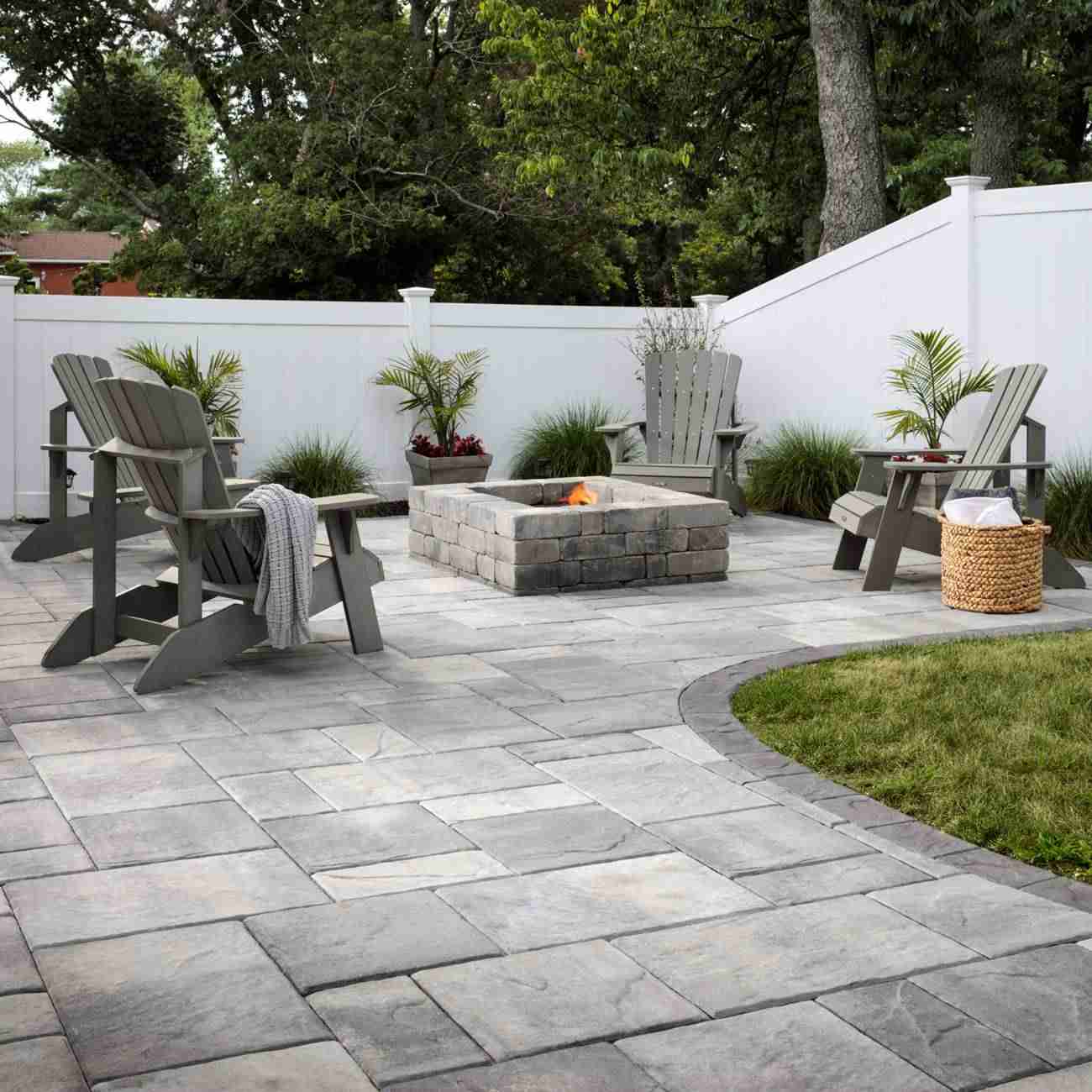
Random layouts use multiple paver sizes from the same family (typically three sizes) arranged in a repeating but non-uniform pattern. Belgard and Tremron both offer multi-piece systems designed for this look. Random patterns disguise cuts at edges and feel less formal.
For most Jacksonville patios, we recommend herringbone for the main field with a contrasting soldier course border. This combination provides maximum interlock strength while framing the space with a defined edge.
Color Selection Tips
Color is where most homeowners spend the most time deciding — and for good reason. Your patio should complement your home’s exterior, not compete with it.
Start with your roof and facade. If your home has warm-toned stucco or brick, lean toward sand, tan, and terracotta paver tones. If your exterior is cooler (gray siding, white trim), slate and charcoal pavers create a cohesive palette.
Lighter pavers are more forgiving in Florida. They stay cooler, show less fading over time, and tend to hide minor staining from pollen and tree debris. Darker pavers create dramatic contrast but require more frequent cleaning to maintain their appearance.
Multi-tonal blends are more forgiving than solid colors. A paver that blends two or three tones — say, sand with hints of gray and cream — masks imperfections and looks more natural than a uniform single color. Most premium paver lines offer pre-blended palettes specifically designed for this effect.
One practical tip: always view paver samples outside, in natural light, laid flat on the ground. Colors look completely different under showroom lighting than they do under Jacksonville’s bright sun at patio level.
Ready to Choose Your Pavers?
The right paver transforms a backyard slab into an outdoor living space you actually use. If you are weighing options for a Jacksonville patio project, we are happy to walk your property, discuss what works for your specific site, and show you samples in person. Earthscapes offers free consultations with no obligation — just straight answers from a team that has installed thousands of paver patios across Northeast Florida.